• Skip to primary navigation
  • Skip to main content
  • Skip to footer
Your Own Place

Your Own Place

Norwich

  • Facebook
  • Instagram
  • LinkedIn
  • YouTube
Coming on a workshop
Commission Us Now
  • About Us
  • Our Services
  • Our Impact
  • Blogs and News
  • Contact Us

News

When Brave Strategy Delivers On Impact: What We Have Learnt About Place-based Prevention

jess · 18/12/2025 ·

The Your Own Place team work incredibly hard behind the scenes, delivering values-led workshops and working with people in the best way for them. To showcase the impact of their work and what insights this brings, we ask a member of the Your Own Place team to share what they have recently been up to. As we end 2025, Colchester Facilitator Belinda and Colchester Project Lead Emily reflect on the incredible impact, learnings, and sadly, the end of our first innovative project embedding a remote facilitator with our partners, Colchester Borough Homes.


“In 2024, Your Own Place and Colchester Borough Homes embarked on the largest project of our partnership yet, to embed a Your Own Place facilitator in Colchester to work with 50 people each year over two years to increase tenancy sustainment skills, money management skills, and ultimately reduce the risk of tenancy issues after move-on.

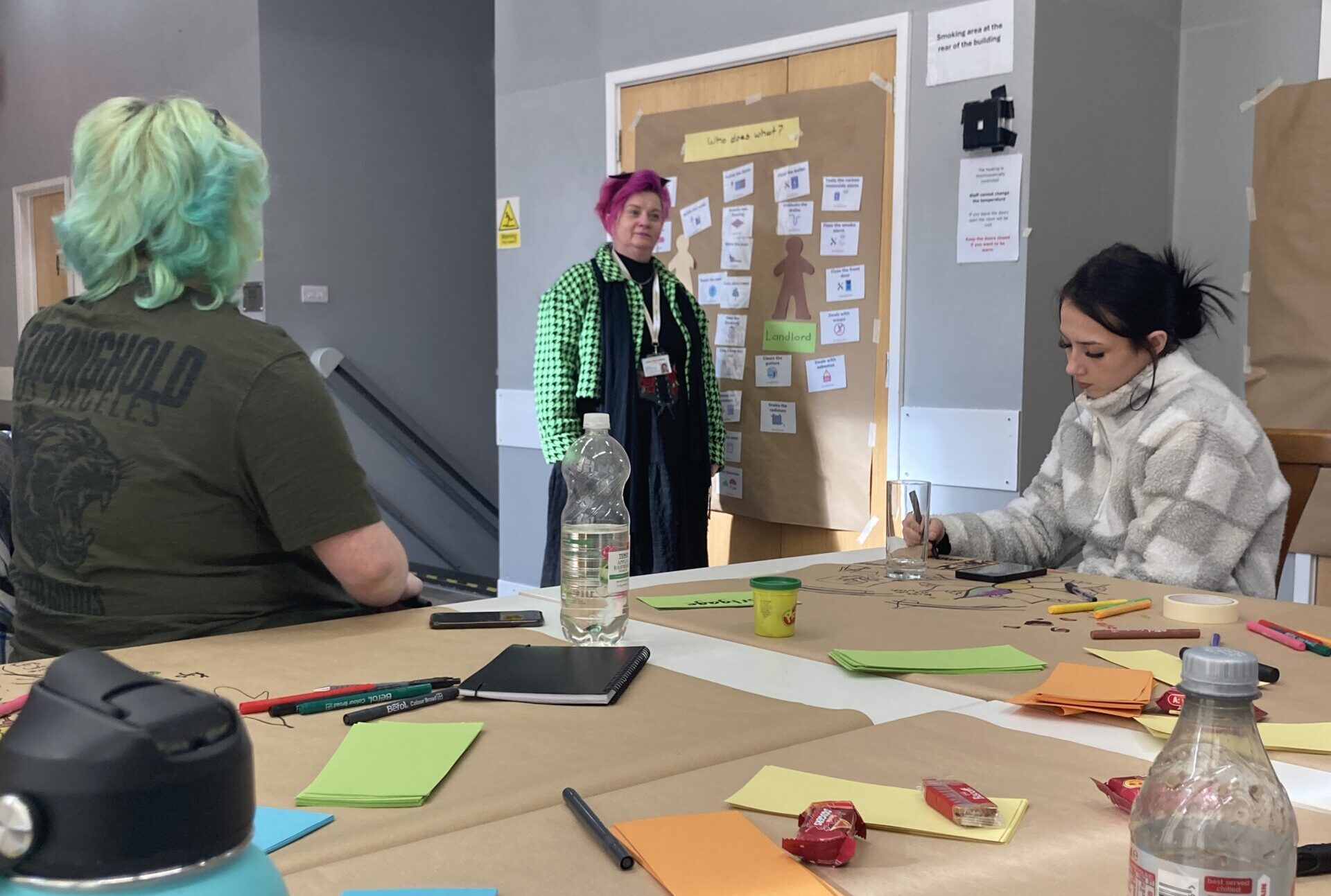
Planning, training and partnership building were the focus of the end of 2024, with our dedicated Colchester Facilitator, Belinda, beginning work in identified supported accommodation provisions in January 2025. Belinda built relationships with the staff at YMCA, Emmaus, and, later on, Beyond the Box – creating relationships that meant staff felt confident to refer residents and companions to her. Belinda became “part of the furniture”, opened up conversations with residents and companions, and facilitated eye-catching and engaging activities to get people involved. This relationship building and, ultimately, becoming part of the teams at each location led to incredible results.

56 residents and companions were referred for support – either referred by supported accommodation staff or self-referred – with Your Own Place working with 45. The approach to engaging with people has been inspiring and incredibly impactful. At Your Own Place, we have always placed value on the way we engage people and invite them to work with us. With this project, we are welcomed into people’s living spaces, rather than expecting them to come to us, which further supports in removing barriers to accessing the right support.

93%

of people reported feeling more confident to ask for help

90%

of people reported feeling that they understand how to manage their bills better

97%

of people reported feeling generally more confident

15

 people moved into secure accommodation

Thank you to Colchester Borough Homes for believing in the work we do, and for integrating us into such an innovative, person-led homelessness strategy. With such incredible impact, we know this difficult decision to end the project early will not have been an easy one. As you can see, all is not lost. The impact remains; we have gathered more insight into how to make connections and engage people, and can now evidence the value of investing in a place-based model. We know that we will continue to use this insight in our future work, and that the people we have worked with will continue to use the ways they have developed to their advantage.

We are so proud of the people we have been working with, the skills they have developed, and the steps they continue to take to move forward.

A very special thank you to Belinda. whose warmth, passion, conscientiousness and empathy have made this project an incredible success.”


Final insights and a personal goodbye from Belinda:

“On the 4th November 2024, I embarked on a new role as a Facilitator at Your Own Place and wow, what a year it’s been. It started with an amazing, intense 3-month training program where I learnt so much and most importantly, it prepared me well for the project. The training made sure I would be able to deliver high-quality, fun and engaging workshops and 121’s in AQA-certified subjects covering housing, money and tenancy that would make a difference in supporting people to understand all that’s involved in keeping and maintaining a home.

Embedding myself in their community every week and becoming a regular face meant I was able to build a higher level of trust with staff and residents, which resulted in more people interested in and attending workshops and 121 sessions. Your Own Place company values, which we all work within every day and use as part of our workshops and 121 sessions, made a big difference to the people who engaged with me as part of their journey into supported or temporary accommodation. Most of the people I worked with were united about the uncertainty of the local housing system, leaving them feeling low in confidence and low in positivity for their future. To understand that they still have a choice, to be asked what works for them, to be asked what they would choose, to be asked what they know and to be able to share safely, to be listened to and heard, to be asked what they would like for their future and all with no judgement was as valuable as the practical information they gained from our workshops and 121’s. 

I have learnt so much from them that has made me more knowledgeable, has taught me so much about myself and made me a better person, not just as a facilitator but in my everyday life. Your Own Place gave me that opportunity, and the team is amazing, and I have truly enjoyed getting to know every single one of them. Working at Emmaus, YMCA and Beyond the Box gave me other teams to work with, and everyone in those organisations made me feel welcomed and valued. Then there are the residents at each place that I have worked with who placed their trust in me and said “yes” not just to me but to themselves, even when they were unsure. Their journeys with me have been informative, fun, emotional, and I can’t think of a job that has brought as great a pleasure as this one. Then there are the residents who were just happy to chat, to engage in my quizzes and ask me questions, which was heartwarming. 

I am disappointed that despite all the positive outcomes, the stretched budgets seen across the sector mean the early end to this project and my time at Your Own Place. It has been an emotional end, but as a company and for me, putting our trainees first and making sure that everyone I was already working with got everything they needed before I finished wasn’t negotiable. 

The takeaway for me is how proud I am of all the trainees I have worked with and their determination to move forward, how much I have learnt and all the amazing people I have met along the way. I truly believe everything happens for a reason, and what comes next is bigger and better. If that can possibly be true after this experience, I’m excited for my future.“

Working Restoratively: Why It’s Vital to Our Mission of Preventing Homelessness

jess · 03/11/2025 ·

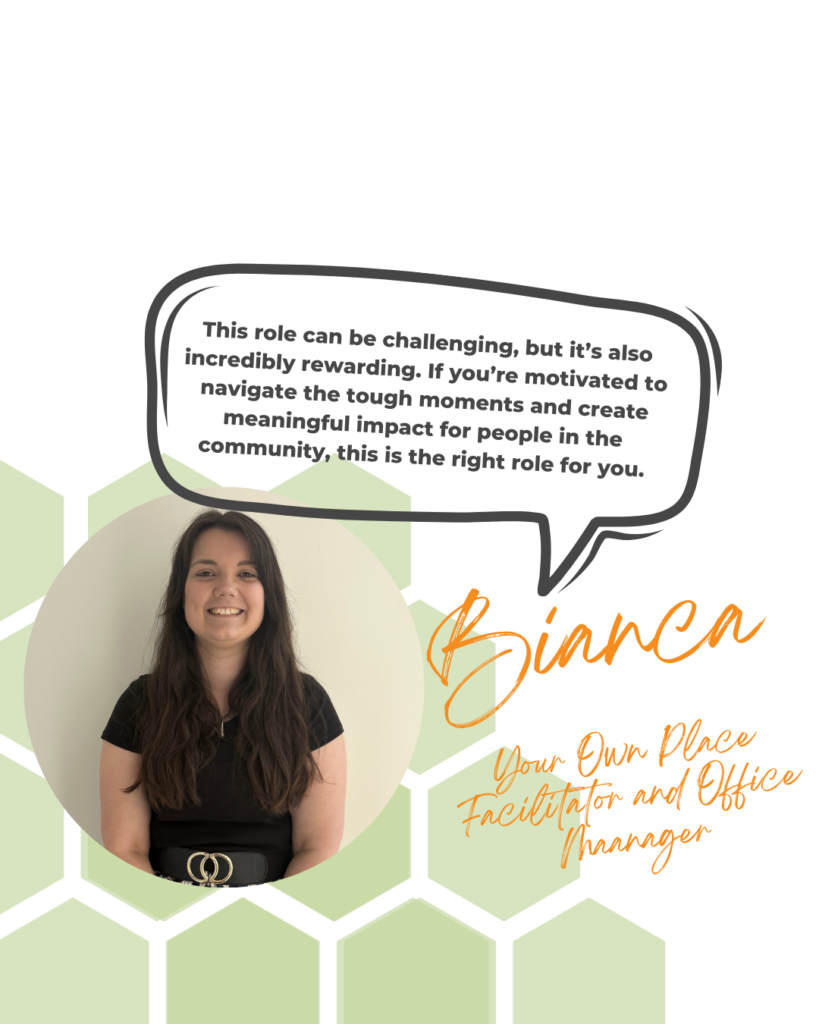
Each quarter a member of the Your Own Place team is going to share an insight into their role at Your Own Place and what they have recently been up to as part of it. This quarter Facilitator and Office Manager, Bianca, reaches her fourth year at Your Own Place and has taken time to reflect on where her passions lie within our work and why working restoratively is so important.

As I reach almost four years at Your Own Place, I’ve been reflecting on what drew me here originally and what keeps me passionate about this work every day. For me, it all comes back to working restoratively.

At Your Own Place, we talk a lot about working restoratively. It might sound like jargon (and honestly, I had to deep dive what it actually meant before I applied for the job; I’d never heard it before, though I was practicing it), but at its heart, it’s really simple: it’s about how we show up with people. That’s something I’ve always been passionate about: how we show up, how we treat people, and how we support them to be kind and compassionate to themselves and to believe in what they can do.

Restorative practice means listening before speaking, asking before assuming, and remembering that everyone has strengths, even if life has thrown them more than their fair share of curveballs. Sometimes it’s those curveballs that have strengthened their skills and knowledge, though that may be hard to see at the time.  It’s about walking alongside people to find solutions, discover what works for them, and understand how they see the world. It’s about shaping the world around their strengths, rather than thinking they were made wrong or broken and need to be fixed to fit in.

So why would that lead me to a job that’s about preventing homelessness? Because that approach has everything to do with it

Preventing homelessness isn’t only about keeping a roof over someone’s head.  It’s about supporting them to build the skills and confidence to keep it there themselves, by finding out what works for them, in their own way. Because it’s not just housing, it’s everything that goes with it: money, work, relationships, resilience, self-belief, and confidence.

Applying a restorative practice allows people to shape solutions based on their own preferences and strengths, rather than what others expect of them. When changes are coming from the individual themselves, they are far more likely to stick to them and keep them going. That can make the difference from someone simply being housed to them building the skills, confidence, resilience, and trust in themselves to maintain their home, work, and relationships in the long term. All of which are core in the prevention of homelessness.

For me, this feels especially true in our work with care-experienced young people, unaccompanied asylum-seeking children, and refugees. Many have had to navigate trauma and instability before even having a fair shot at adulthood, and applying the restorative practice means recognising their resilience, giving space for their stories, and holding onto the belief that they can and will thrive while still in the earlier stages of their housing journeys.

The most rewarding moments are being there to witness someone’s face light up as they reach a solution for themselves, one they’ve determined by understanding their own needs and what it takes to make things work for them. Watching a young person go from feeling uncertain to proudly taking their next step forward. Seeing these things happen brings me joy in my work. I know that feeling myself: I remember a period in my life when I shifted from feeling like I was “waiting to be rescued” or “having to fit the given mould” to realising I can do this, and I can do it my way. 


Of course, it’s not always easy. It means biting your tongue when you want to jump in with the “answer.” It means holding space when emotions run high. It means believing in people even when they’re struggling to believe in themselves. That takes patience, practice, and probably an extra coffee or two.

At the end though, you get to witness someone step into their own power, see their confidence grow, and watch them take a path that keeps them in a home, in a job, or in a community that values them. What’s not to love about that?

At Your Own Place, we know that preventing homelessness isn’t about quick fixes. It’s about people. And people, whether care-experienced, newly arrived in the UK, or simply finding their way, thrive when they’re met with respect, curiosity, and kindness.

To read more about #TalkMoneyWeek, visit the website by clicking here

Beyond the Screen: Top Three Tips for Delivering Values-Led Workshops Online

jess · 25/07/2025 ·

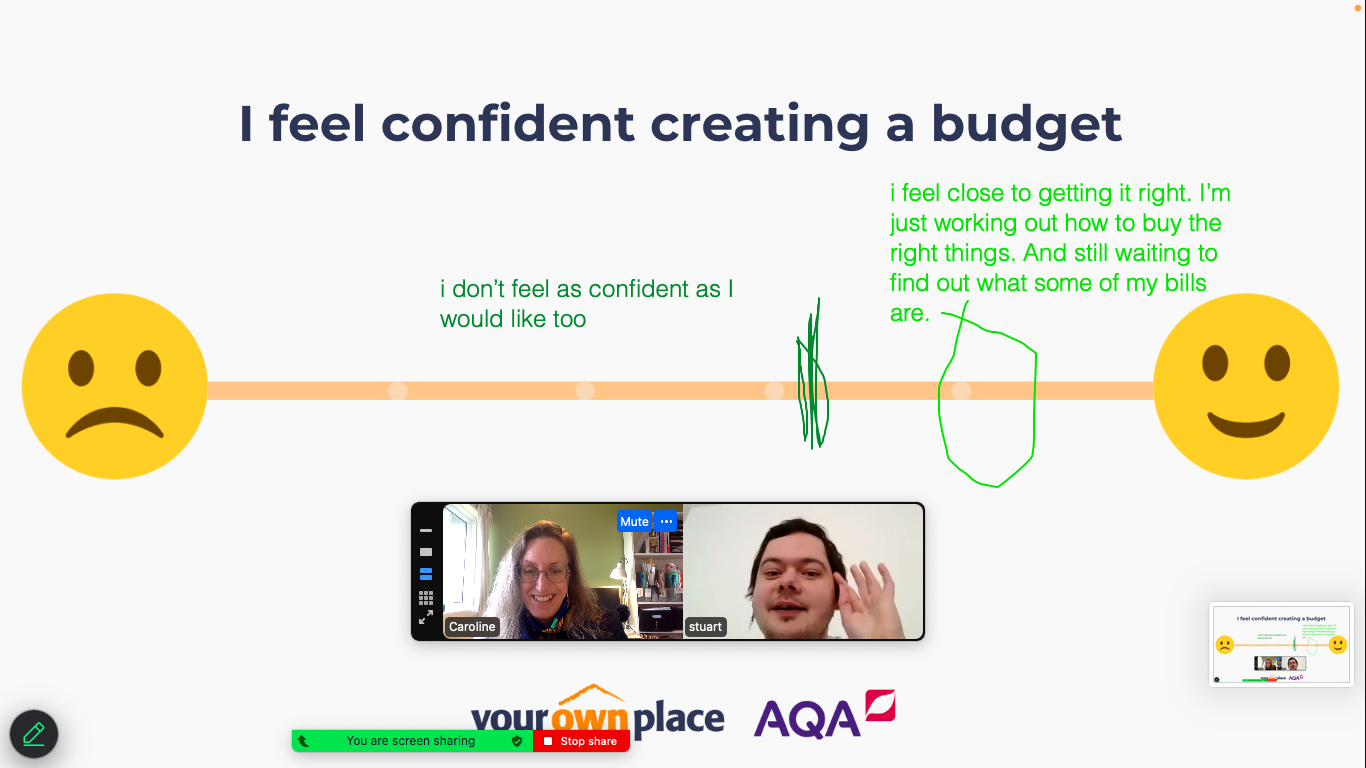
Each quarter a member of the Your Own Place team is going to share an insight into their role at Your Own Place and what they have recently been up to as part of it. This quarter Facilitator, Caroline shares about her experience in navigating the realm of online delivery in a world where Zoom fatigue can easily take over.

It’s no exaggeration to say that when I was asked to be the Facilitator leading a project delivered solely online, my heart sank. Using video calls during the pandemic had been unfulfilling and draining for me. I experienced a feeling of dread at the potential of a “relapse” to those experiences of quiet squares with muted mics, black screens, and the eerie absence of the informal cues I rely on in person. In the course of the last year and a half as a Facilitator at Your Own Place, I’ve embraced online delivery, flipped my mindset and developed my techniques to make online delivery more engaging, interactive, and responsive to the needs of all participants, myself included.

I’ve worked intentionally to ensure online delivery doesn’t feel disembodied or transactional. Remaining human and approaching each session with an intention to lead with Your Own Place’s values at the core and adding my own strong belief in compassion and authenticity. Our Zoom sessions are a space of trust, connection, growth, and sharing our human experiences.

1# Recognise the Power of Relationship in Digital Spaces

For me, the heart of impactful online delivery is one foundational principle: relationships matter.

Whether facilitating a group or 1-2-1 workshop, how I show up matters. It’s taken me time to really embody this belief; embracing the ‘relationship first’ approach was amongst my mindset shifts. For a while, early in my Your Own Place career, I put content first, prioritising the topic; I quickly realised the importance of investing time to build a relationship. Knowing when talking about how the person is and what’s on their mind, rather than the content I’d planned, was far more impactful. It meant I could better understand the whole person and establish greater trust. I’ve found this shift has deepened relationships and made content more relevant and meaningful by grounding it in real-life experiences, adding far more value to sessions.

In digital environments, I’ve learned that relational work takes extra effort, and it’s worth it. A warm welcome, a genuine check-in, a simple acknowledgement when someone shows up despite a chaotic day. Meaningful gestures go a long way. They remind us all, we’re not just participants – we’re people who matter.

2# Meet People Where They’re At

Zoom fatigue is real. I believe it’s where I was when first asked to lead online delivery. So is digital overload; it can feel like “everything” is online. Parenting during meetings, or juggling two jobs while trying to stay present in a workshop, is a common experience. I’ve found online spaces can magnify life’s complexities and distractions. That’s why, at the heart of equitable and restorative online delivery, it’s so important to meet people where they are.

For me, this means:
– Starting sessions with open, unifying questions: “What do we need today to be present in this workshop?”
– Normalising the need to step away or keep cameras off without judgment.
– Checking in rather than checking up; choosing a phone call instead of Zoom if needed.

Meeting participants where they’re at isn’t about lowering expectations — it’s about acceptance. As a Facilitator, it’s an honour to be invited into people’s homes, to become part of their day and to witness the humanity behind the screen.

3# Be Genuine

In a culture obsessed with polished presentations and curated virtual personas, I believe the best thing I can do, in my Facilitator role, is to be real. Sharing my vulnerability and owning my mistakes creates opportunity for real connections. I’ll laugh at my tech mishaps and openly admit when I don’t have all the answers. My hope is that it gives others permission to be themselves too, opening the door for more honest conversations, which deepen the learning and hopefully lead to long-lasting change.

Final Thoughts…

Taking the extra time to get online delivery right means being the difference that avoids another bland, draining digital meeting. I believe our approach to online delivery can shift someone’s mindset about attending online sessions, meaning they may be more open to accessing similar opportunities in the future.

Online delivery means being welcomed into someone’s home, their safe space – recognising and respecting that further builds trust and strengthens connection. In a world that often feels fragmented and transactional, let’s make video calls a place of human-ness and connection.

Honest reflections of a new CEO

jess · 23/04/2025 ·

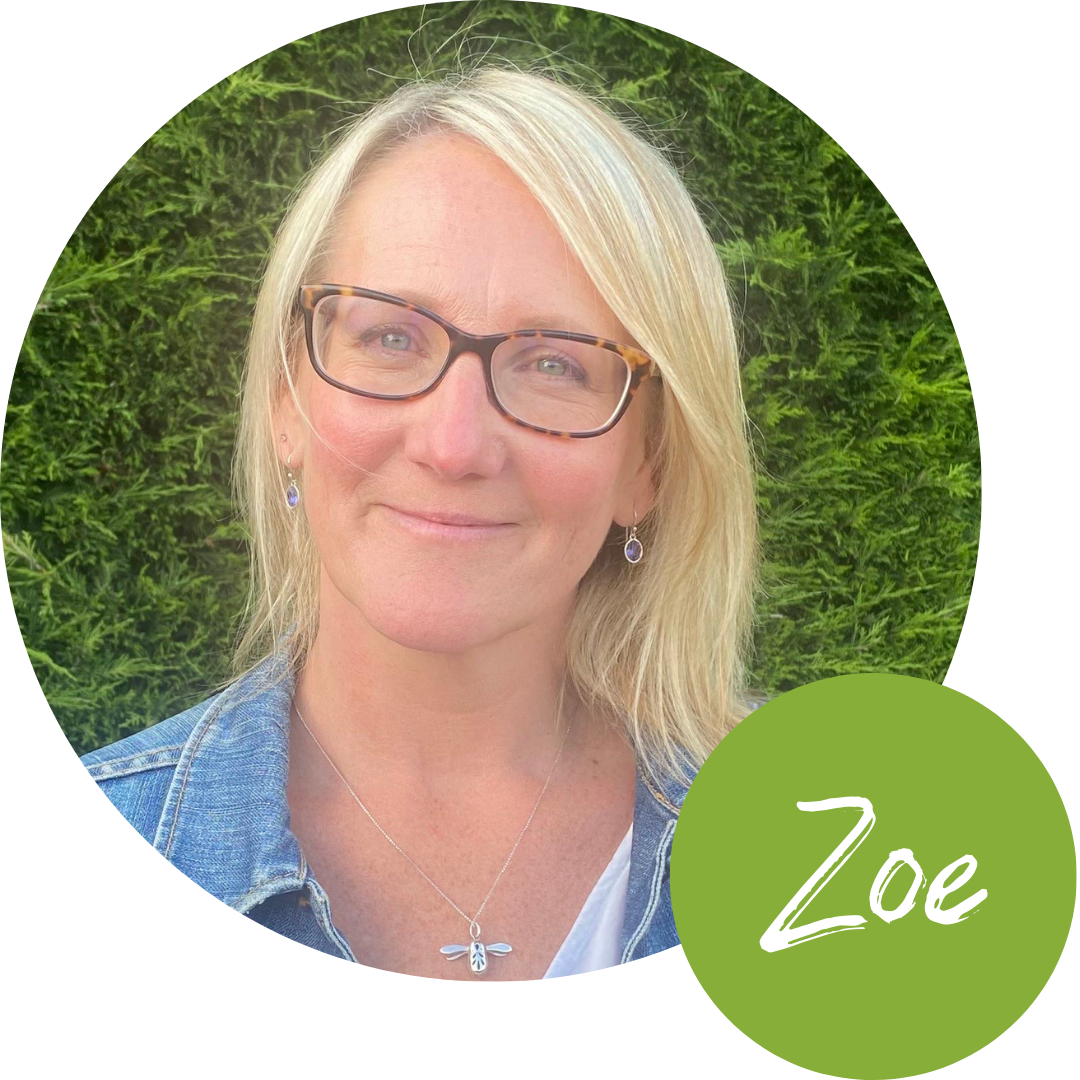
Following on from her interview welcoming Zoe as our new CEO, facilitator Emily reconnected with Zoe, six months on, to hear about her reflections on becoming Chief Executive Officer of a social enterprise.


Hi Zoe! Before we get started with the serious reflective questions, some quick-fires for you:

What’s your most-used emoji? 😂

Fruit or vegetable? Fruit

Summer or Winter? Summer

Movie or book? Book! I’m currently reading Friends and Purpose, by Maff Potts

What does your YOP induction mug say? Visionary, Font of Knowledge and Proper Northern Lass

So, Zoe, last time we got together to blog, we were introducing you, your priorities, and your experiences. This time, I’d love to focus on what you’ve been learning and thinking about since being in the CEO role.

First off, how have you been settling into the role?

Wow – I feel inspired and challenged. It’s a strange combo of feeling like I’ve been here for ages, to feeling like I’ve still got so much to learn. 
Becoming a CEO has made me think a lot about my leadership style, reflecting on hierarchy, taking people with me, authenticity, humility, and boundaries. Inclusivity is also important to me when making decisions – I want people to be involved. The title of CEO can impact this, and there’s definitely discomfort with this for me. I’ve understood again just how essential it is for people to share their perspective, but how hierarchy can affect this – and I have been reflecting on ways to make it safe for colleagues to share their perspectives.

It sounds like you’ve had a lot of thought around how you lead in your role. Transition can also bring these considerations up, and reflection on the leadership style that has come before. Taking the reins from a Founder CEO must be a unique experience!

Yes, this isn’t something I’ve done before!

What has this been like? How has this challenged you?

I’m in awe of and have total respect for Your Own Place’s Founder and previous CEO, Rebecca White. 
At the same time, I wanted to make sure I wasn’t trying to replicate her – but I also didn’t want to let her, the team or the partners down. I think it’s important that I am authentic to me, while not creating disruption for the team.

That’s a lot to balance – and I agree, we want you to lead as you! What have been the highlights so far of becoming CEO of Your Own Place?

The team are amazing people and each person brings their own talent. The team’s collective passion and commitment to Your Own Place’s values, mission and vision are inspiring and this passion and commitment both shine through in everything the team does. They work really hard, but also make sure they look after each other and have fun. The team has welcomed me in true Your Own Place style, and I feel accepted.
Another highlight is how receptive partners have been. Your Own Place has a strong positive reputation, and I’m loving making connections and developing our relationships for continued collaboration.

Oh, I’m so glad that we’ve welcomed you warmly! When we blogged before, you talked about our approaches being a huge attraction of Your Own Place. Where have you seen this in action?

I’m seeing the approaches in action all the time! The team consistently demonstrates the organisational values. They do what they say they will do, they recognise what matters to people and always approach from a place of equity and empathy, ensuring their support is asset-based, restorative and, above all, human.

As someone who is part of our amazing team, I’m blushing! We also talked about your purpose before, how is being CEO of Your Own Place aligning with your purpose?

My purpose is to challenge in the name of social justice; I have a strong desire to create meaningful change and contribute to building a more inclusive and equitable society.
Homelessness prevention aligns with these purposes: bolstering individual and community resilience, sharing important knowledge, and building confidence in individuals to seek help and challenge injustice – this is what gets me out of bed in the morning!
The Your Own Place team are skilled and well-placed to enable this through their workshops, community conversations and engagement work.
I feel rewarded from making a positive difference in people’s lives and thrive on the opportunity to innovate and develop effective solutions to complex and pressing social issues – the way that we at Your Own Place work flexibly to co-create with and meet the needs of the people and communities we’re working with exemplifies this.

Mind blown – thank you for summarising our work so passionately. Zoe, what is your vision and hope for the future of Your Own Place?

My vision is that everyone has a safe and sustainable home, that they are able to keep and manage effectively. The vision is to prevent homelessness wherever possible.
My hope is that there is more long-term investment in preventing poverty and homelessness. That Your Own Place can continue to build its presence in the prevention space through demonstrating its strength in building trusting, human relationships that facilitate change, and therefore deepen its contribution to community capacity for preventing homelessness.
I hope that we continue to participate in supporting people to recognise their potential, their power and their voice, as well as supporting communities to recognise their assets and use their power.

Thank you for sharing that, Zoe. What are your hopes for the team at Your Own Place?

I feel so confident that the team has the behaviours, skills and knowledge to enable Your Own Place’s growth – and I want us to do this together. We’ve undergone two significant transitions in a short space of time – a new CEO and an office move – and I can see that this can impact confidence in decision making. I trust the team wholeheartedly and want us to continue to work in a restorative way with each other. I want to continue to grow the confidence of the team and embrace the value of each individual’s perspective and strengths. I can’t say enough how incredible the team is – highly skilled and dedicated to the mission – and I want them to thrive. I also want to be able to offer the best possible working conditions.

Any other thoughts about the future of Your Own Place as an organisation?

Of course – I hope that we continue to work with our partners and develop new partnerships too. I’m interested in looking at homelessness prevention from all angles to find ways to embed it wherever it fits.
Organisationally, I aim for the freedom to shape our organisational structure in a way that is effective for us, and not just a traditional hierarchical structure. I want to provide opportunities for the existing team – they go above and beyond without exception and are encouraged to identify their “Big Hairy Audacious Goals” which supports us to consider growth opportunities within Your Own Place.
I also want to provide opportunities for new people to join our organisation, including people with lived and living experience. We were unable to secure funding for our previous model of a living experience informed advisory board, and I continue to explore how we can build this back into our organisation. It’s important that the people we work with are at the core of Your Own Place: their ideas, experience and knowledge woven through everything. Collaboration and co-creation are essential.

Amazing – the future is looking very exciting. Finally, what are you looking forward to more of over the coming months?

It’s high on my agenda to visit more workshops and community engagement time to see the team in action.
I’m also excited to continue to collaborate on our new office together, exploring how we make our new environment work for us. I know that necessity is the driver of change, and our new chapter at Carrow House gives us the opportunity to reset and review. It’s also a space where we can embed our roots in the community more, spending more time in the spaces that are already accessed by the people we work with, rather than asking them to come to us. This strategic shift towards place-based models is exemplified by the work we do with Colchester Borough Homes and Norwich Foodbanks – these projects demonstrate to us a different and effective way to reach people. Continuing to build on what we learn together will only make us more resilient and stronger.

Zoe, thank you so much for spending time catching up with me. I’ve really enjoyed hearing your insights into the journey of a new CEO and your hopes and plans for the future of Your Own Place.


Connect with Zoe on LinkedIn

Reflections on Change

jess · 06/01/2025 ·

Each quarter a member of the Your Own Place team is going to share an insight into their role at Your Own Place and what they have recently been up to as part of it. This quarter our Chief Operating Officer (COO), Jess Luce-Rackham shares about her experience of organisational and leadership change.

Over the last six months, Your Own Place’s CEO transition has been a hot topic of conversation with partners, with peers at training events and within our organisation. We’re very much still in a period of transition, systems are a quick(ish) switchover but embedding new humans in the team takes longer. I thought I would use this space to share some of the tools we have used to manage a large change within our small, bustling, values-driven social enterprise. 

The Decelerator support service 

The Decelerator is a free support service that offers information, tools and hands-on support for creating better endings. Earlier this year I had a one-hour 1-2-1 coaching call with a member of their team, to talk through my concerns, thoughts and ideas following our founder (Rebecca) moving on from Your Own Place and our new CEO (Zoe) joining. With a busy diary, I wasn’t particularly sold by the idea of finding space in my calendar. However, using the call to pause, reflect and talk to someone with no connections to Your Own Place was invaluable. I was introduced to the Bridges’ transition model, which influenced how I planned the next steps with the team. 

Team collaboration – transition planning workshop

In early August, Jess Marsh (Lead Facilitator) and I facilitated a one-hour team workshop using the three stages of the Bridges’ Transition Model as a structure. The Model identifies three clear phases of a transition following a big change event, and how these may impact team morale. By approaching these ahead of time, the aim was to improve awareness and identify how we could support each other through each phase.

By asking the team coaching-style questions, we collaborated to identify how we would manage the leadership change, considered what we needed as individuals and as a team, and all took responsibility going forward. 

The team transition plan, key messages and review process 

Following the workshop, I summarised what we had agreed during the meeting and key messages for the time period; ultimately things we may all need to hear when we’re stretched and in the thick of the transition. This summary document was circulated with the team, the Board, and our social investors, and is now part of my ongoing review cycle. 

Our team commitments included: 

*Team Days – at Your Own Place five days per year are allocated as ‘Team Days’. These days focus on spending time connecting together, they provide space for whole team training and development or can be designated space for team wellbeing initiatives or support.

What’s next? 

We are currently completing our annual 360 feedback process, where all team members will receive feedback about their strengths and development areas. Providing a structured, values-led and honest feedback loop where all team members have the space to share their views feels more important than ever. 

To finish… 

Ultimately change at work can be hard. There will be some days it feels easy and other days it feels difficult. Within all this, we have to consider our personal relationship to change, what skills we have banked on before and then how they can be applied to the next change we encounter.

  • Page 1
  • Page 2
  • Page 3
  • Interim pages omitted …
  • Page 17
  • Go to Next Page »

Footer

©Your Own Place CIC | Built by Business Equip

Log in
  • Privacy Policy
  • Equal Opportunities Policy
  • Equal Pay Policy
  • Equal Recruitment Policy

©Your Own Place CIC. We are registered in England and Wales. Company number 08751344.


Copyright © 2025 · Your Own Place on Genesis Framework · WordPress · Log in